Genmark creates and runs social media marketing campaigns for startups and small businesses. Early testers were able to cut a week's worth of marketing work from 6 hours down to 30 minutes.
Primary competitor:
Buffer, social media scheduling and publishing for small businesses.
Goal:
Offer AI campaign and content creation in addition to scheduling and publishing for small businesses.
Measure:
Time saved creating a campaign with content for 1 week.
Result:
A workflow that's 12x faster.
As the first design hire on a team of 10, I defined the design function end-to-end - from discovery, competitive research, and product strategy through prototyping, built and validated product.
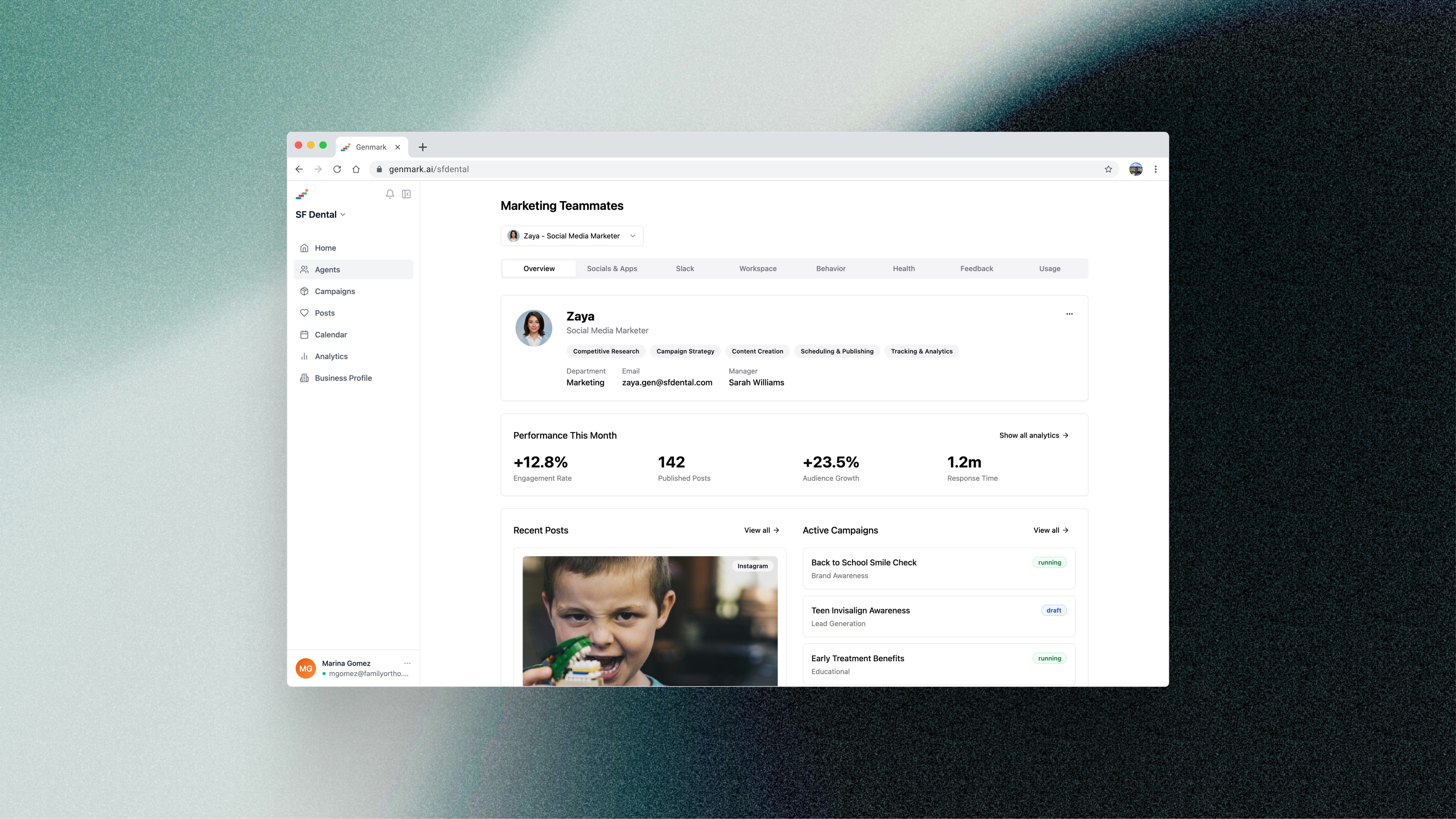
As a Marketing Strategist, you don’t open a dashboard or start with a blinking cursor.
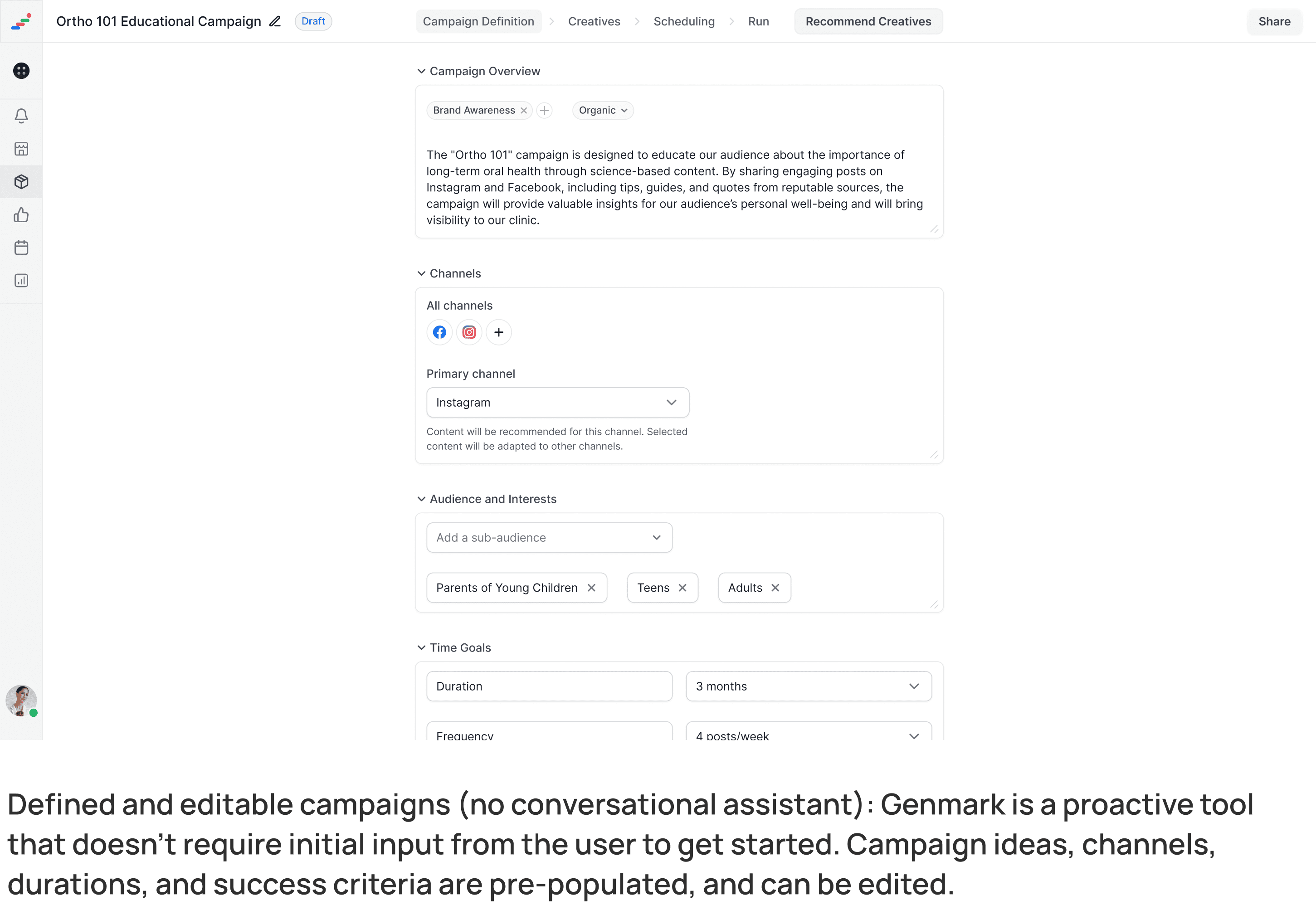
You open a platform, and it already knows your brand. It’s scraped your site, parsed your tone, and has created marketing campaigns, recommending what to post, which channels to post to, and why.
Creatives (AKA the images, videos and captions that go on your social media) are ready. They're fully crafted, on-brand, and aligned with the overarching campaign.
Feel like it's almost there but not quite? Make quick edits.
Hit schedule, and Genmark will post content at the right times.
The beginning of Genmark: How do we convince Buffer users to switch to us?
Buffer is another social media marketing management platform targeted to small businesses, and their strength is their simplicity. It has the basics and works for small businesses. Our rationale to attract this audience was to show them:
The time they'd save by using Genmark
The benefit of a highly autonomous platform that doesn't require the manual input that Buffer does
Buffer doesn’t do campaign-level thinking. So, marketers brainstorm and define campaigns outside of the tool and then come in to add images, videos and captions when they know what they want their posts to look like.
To differentiate, we built Genmark to offer strategic recommendations and help marketers make thoughtful decisions quickly.
97 marketers told us they wanted a strategy partner
The founder of Genmark asked marketing strategists how they thought AI would reshape their work, especially for organic social media marketing.
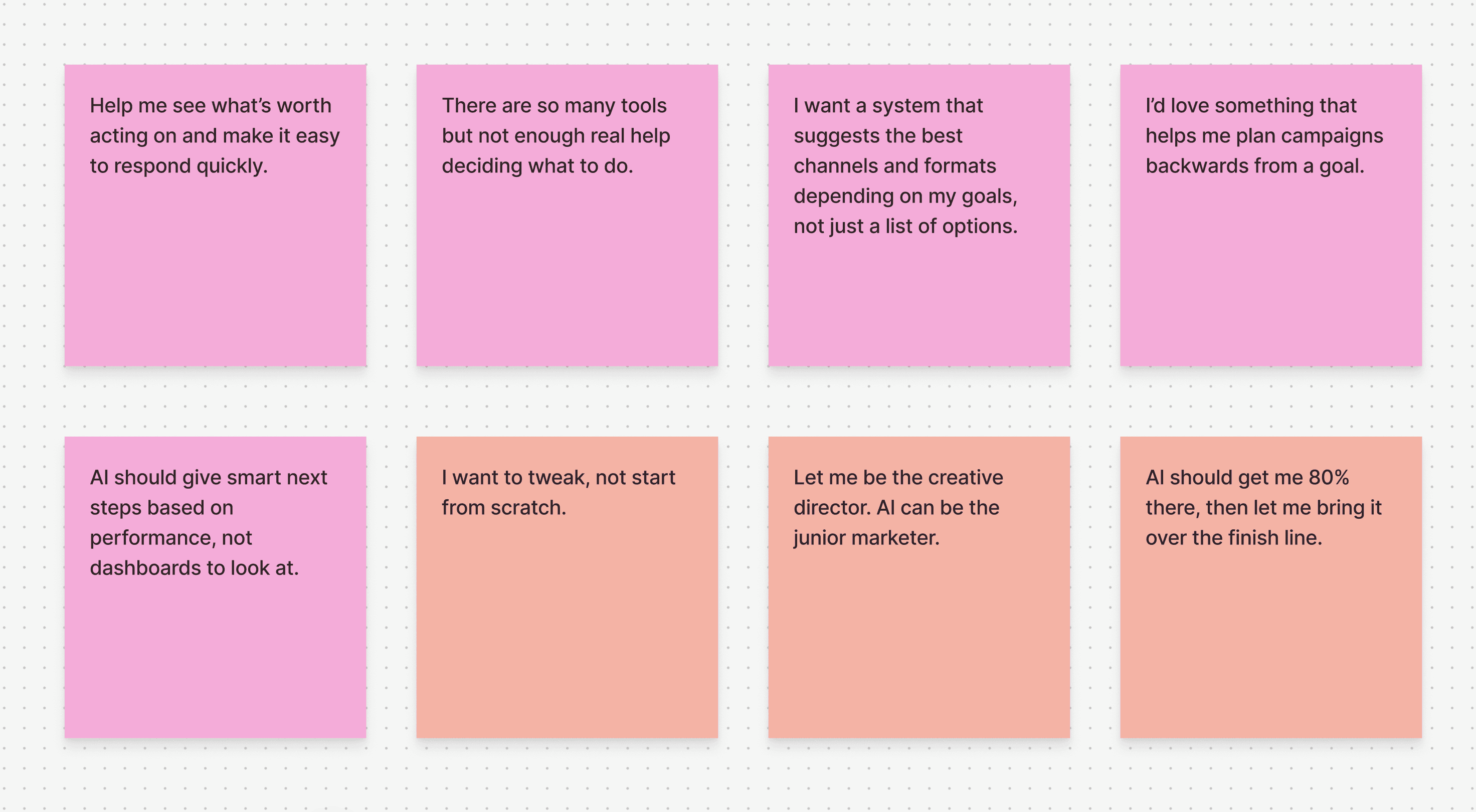
I pulled out some recurring themes. Marketers said:
“Tell me which platforms and content types to use - and why.”
“I need smarter recommendations, not dashboards.”
“I want generated content to be tied to my strategy and brand.”
Their vision framed Genmark's value. I reframed how I see my work from 'I'm designing an AI marketing platform' to 'I'm designing a strategy partner with good judgement for marketers'.
We scoped the MVP to work beautifully for Instagram, Facebook, and LinkedIn
We started wide and it all felt important. The founder and I sat down together to narrow the scope and focused on one persona: a solo marketer running organic campaigns from start to finish.
We kept:
Onboarding through website scraping
Strategy generation
Creative generation and editing
Approvals for content
Scheduling and publishing
Instagram, Facebook, LinkedIn support
We cut:
Carousel/video content
Paid ad campaign support that needs budgeting and a lot more channels
Multi-user roles
X, TikTok support
This way, we were set to create a product that works really well for one person with support for the 3 most effective social media channels for small businesses and startups.
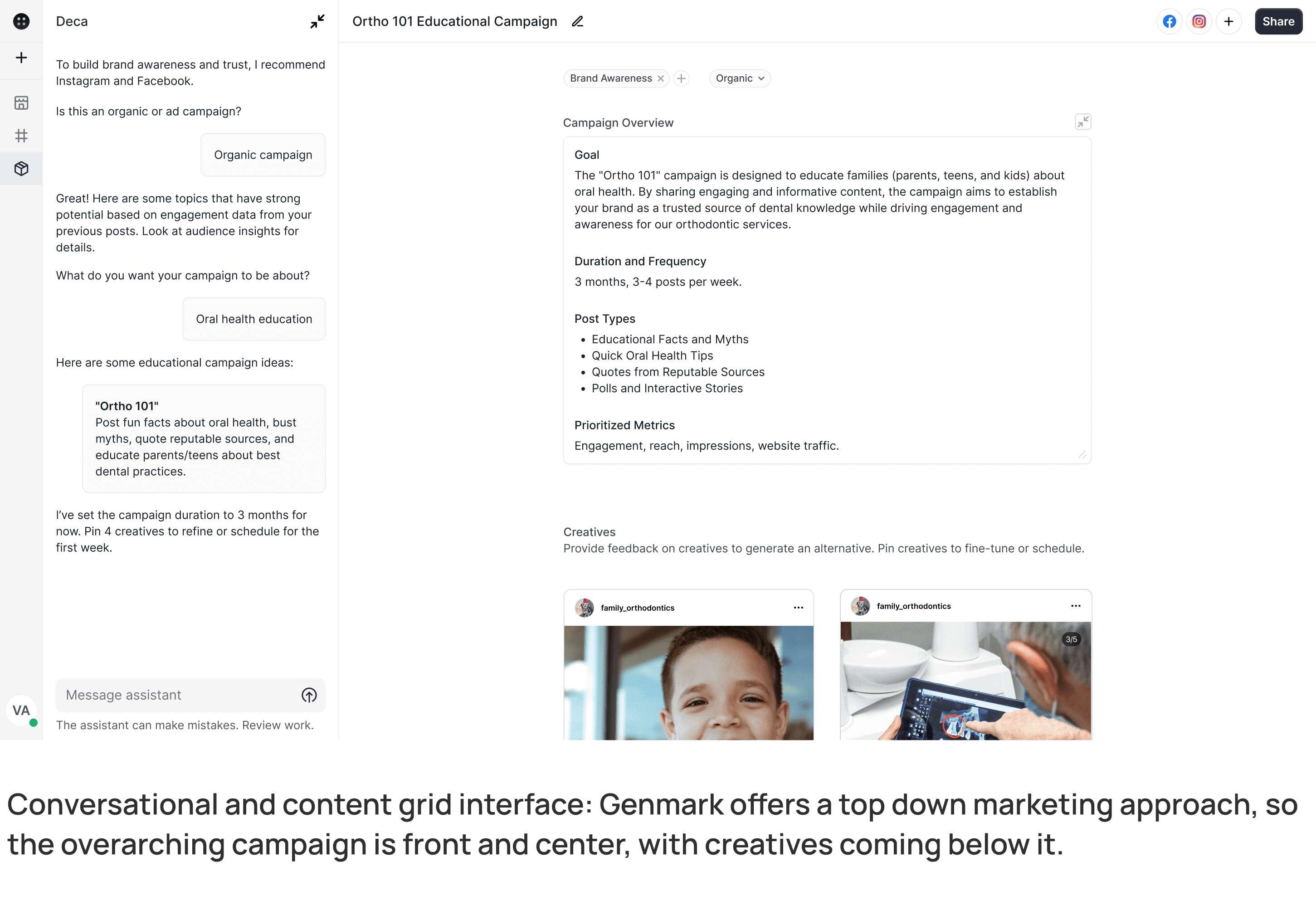
Deciding on a layout that enables Genmark's proactive agent vision
A big design challenge was finding the right balance between proactive recommendations from the tool and reactive behavior in response to the user's input.
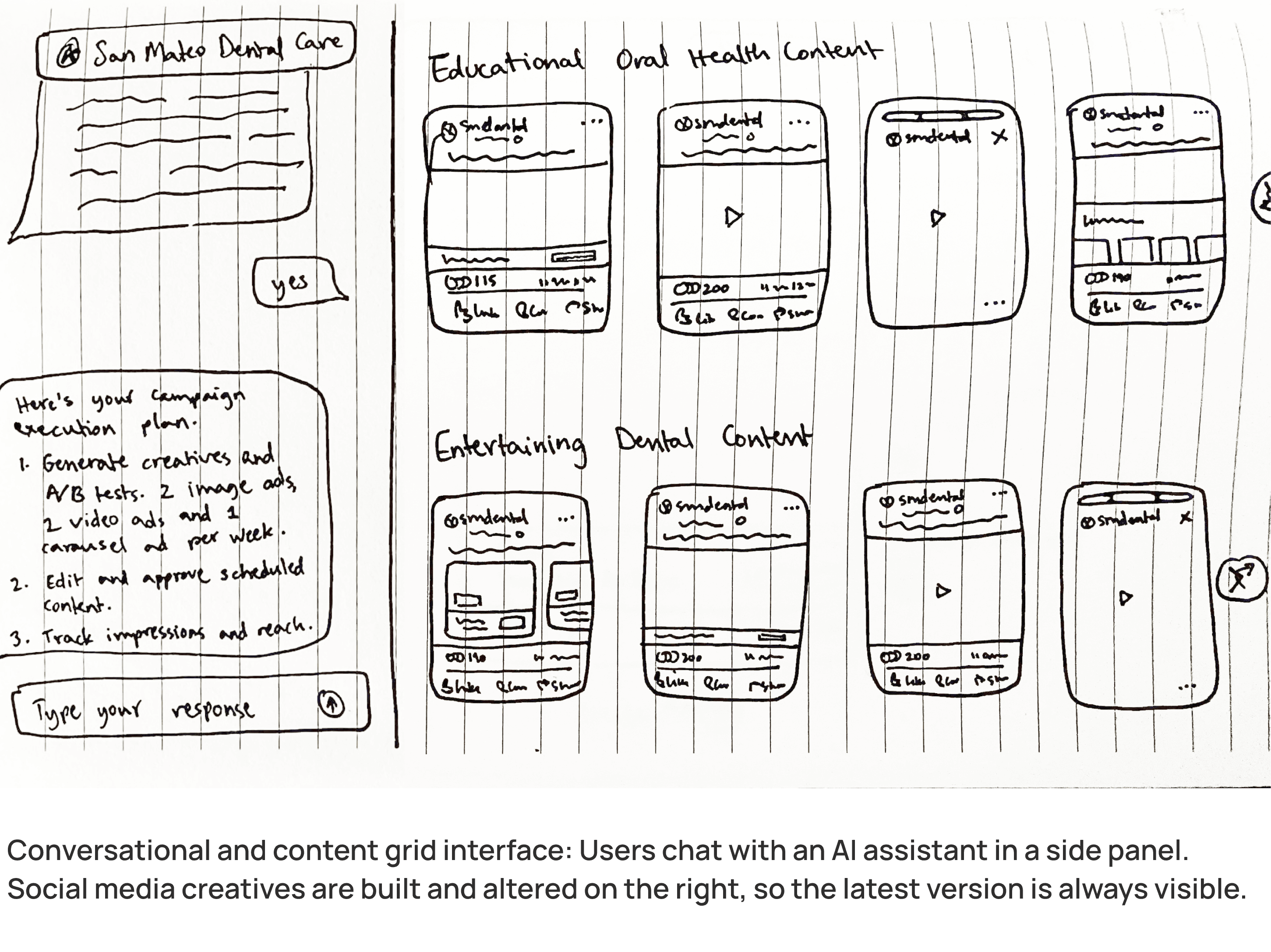
Should the interface feel like ChatGPT - a back-and-forth with an agent? Or should Genmark take the lead without waiting for any direction from the user?
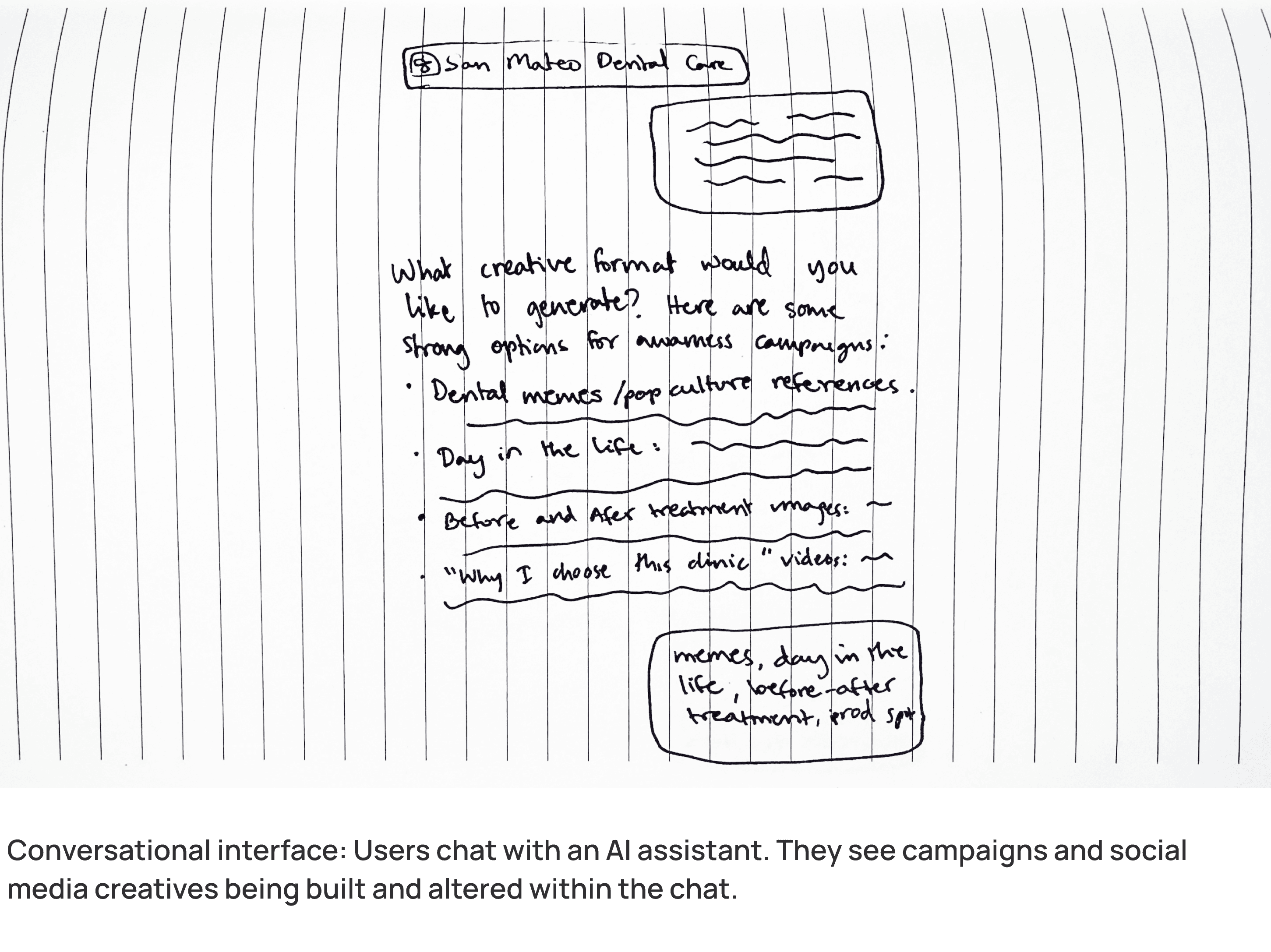
Since Genmark is positioned as a strategy partner, I designed a multi-turn interaction flow: the agent leads with scannable recommended campaigns and posts upfront, without requiring prompting. When marketers want to refine, parameter-based AI steering - sliders, tone selectors, and dropdowns - lets them edit generated content with low effort. When they need a specific change, they can add a prompt. I also designed the checkpoint between automation and human judgment - defining when Genmark acted autonomously and when marketers were prompted to review before content went live.
Marketers trust recommended campaigns when they see rationale
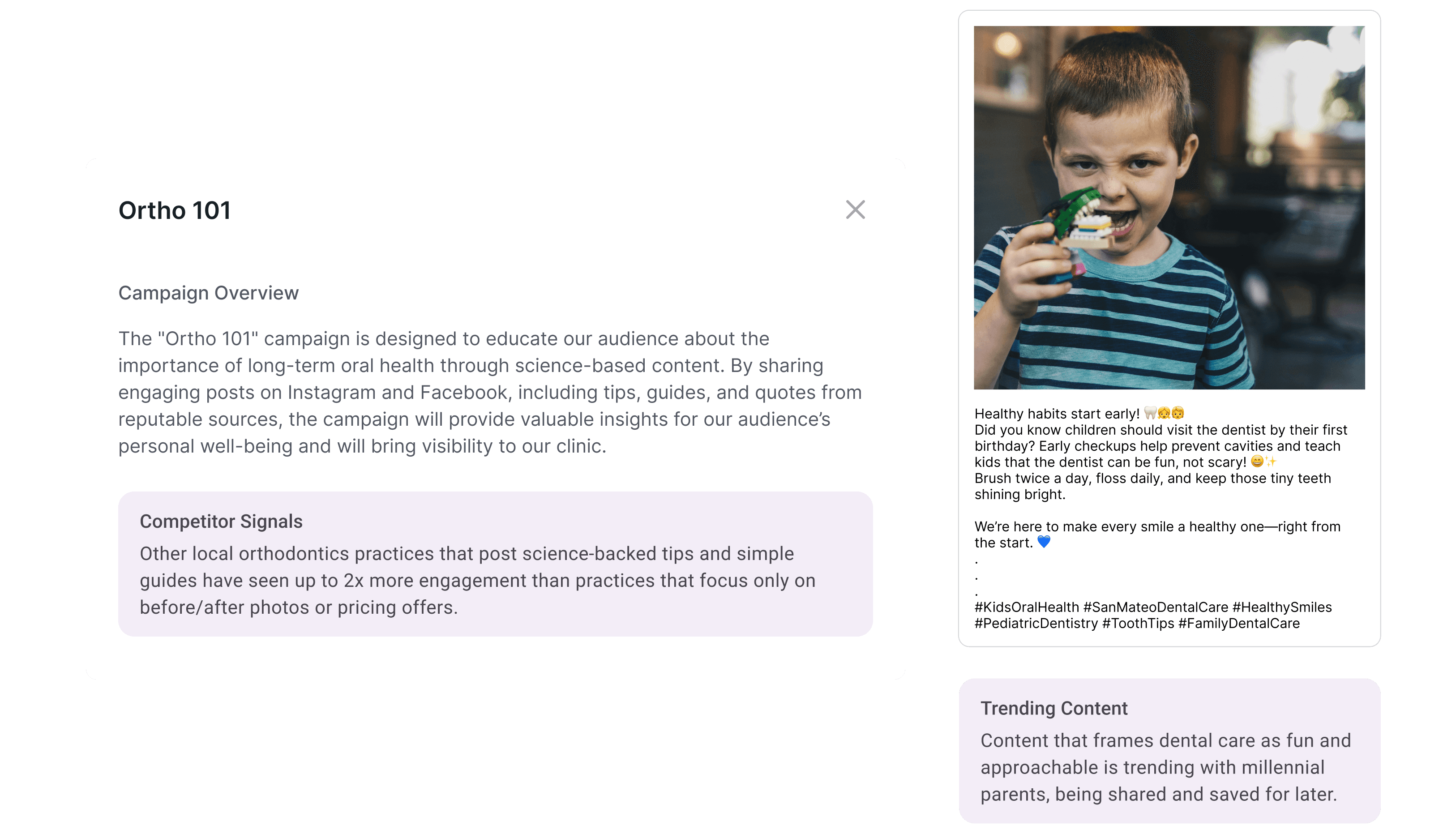
Early testers saw recommended campaigns, posts, channels and times very quickly but didn't trust them because they didn't know where they were coming from. Especially with AI tools, we're able to build trust when we know what's happening behind the UI. I knew how the engineers were building Genmark- the recommended campaigns were based on competitors' campaign performance, social media trends, and assets extracted from the website/ uploaded by the user. So, I made the backend clear in the UI, explaining how the recommendations come to be. That rationale helped us build trust with early users, and increased recommendation adoption by ~40%.
Early tests showed major time savings
We tested Genmark with 12 early-stage startups. Five had marketers, seven didn’t. So in many cases, business owners were the users.
On average:
A one-week campaign took ~6 hours to plan and execute in Buffer
The same campaign took ~30 minutes in Genmark
This 12x time savings without sacrificing quality was the biggest value we delivered early.
Pre-Launch Outcomes
12x faster campaign creation validated across 12 startups
40% increase in AI recommendation acceptance after surfacing agent reasoning in the UI
A deployed platform ready for investor demos
Vision demos that became a top asset in VC pitches